


travelmania

Hawaii Tips
One of the best and most inexpensive ways to experience the beauty of Hawaii while truly enjoying its perfect climate is to camp. We took a four-day trip to Kauai and had a great time while saving money and seeing a side of Hawaii that you just can?t from beside a pool. We decided to splurge for a rental car so we could maximize our ability to explore the island and carry gear that made our trip comfortable and easy. Here are a few things we learned along the way.
Be mindful of the rainy and dry side of the island. Unless you enjoy being soaked, you want the dry side.
Take a tarp ? Useful for so many things esp. if you get the dry vs. wet side thing wrong.
Fill a duffel bag with useful things such as BBQ tools, spices, garbage bags, zip loc bags, sun screen, etc? stuff this bag into a cooler, duct tape it closed and check the whole thing. When you arrive, open the cooler, pull out the bag of gear, fill the cooler with ice and your favorite beverage and be on your way.
Make your first stop Costco, there?s one on the four main islands, and purchase all the things you?d like to eat/drink for the trip.
Make your second stop Wall-Mart or a comparable store and buy yourself a cheap BBQ and some charcoal along with anything else that you couldn?t stuff in you duffel bag, or was just too huge to be practical at Costco.
Permits are required for most campsites in Hawaii. There are national, state, and county campsites throughout the islands. The state and county permits offices are often in separate building but located rather close together. If you?re a planner, you can apply for and receive these permits through the mail. It appears online permitting has recently been added as well for some sites. Planning ahead does have the benefit of making sure you get to camp in your first choices as the most popular sites often fill up. If you?d like to wing it, you can go the day you arrive and spend an hour or two getting your permits in person. Just have a couple backup plans in case your first choices are not available.
Off the record: Most locals will say that permits are not necessarily required. This is completely up to you. There is a fine involved if you are caught camping without a permit. We chose to get permits although we were out of luck for a couple places we would have liked to camp. For us, the money was not a problem as most sites are about $10 per night. In fact we were happy to support the local infrastructure. The problem we had was the hassle with the process. You chose just remember that they need income from tourists like us to keep up the beautiful spaces we enjoy.
Helpful Websites:
https://www.ehawaii.gov/Hawaii_County/camping/exe/campre.cgi
http://www.hawaiistateparks.org/camping/
http://www.kauai.gov/Government/Departments/ParksRecreation/CampingInformation/tabid/176/Default.aspx
http://www.hawaii-county.com/parks/parks.php
We stayed in an inexpensive hotel the first night we arrived in order to get our bearings. Although we didn?t do it, a hotel the final night would have simplified packing up as well as prevented us walking through the airport with water dripping from our packs. (We screwed up the wet/dry side thing and ended up ?sleeping? under tarps and trying to pack up between torrential downpours.)
-Mike Ruffo
Be mindful of the rainy and dry side of the island. Unless you enjoy being soaked, you want the dry side.
Take a tarp ? Useful for so many things esp. if you get the dry vs. wet side thing wrong.
Fill a duffel bag with useful things such as BBQ tools, spices, garbage bags, zip loc bags, sun screen, etc? stuff this bag into a cooler, duct tape it closed and check the whole thing. When you arrive, open the cooler, pull out the bag of gear, fill the cooler with ice and your favorite beverage and be on your way.
Make your first stop Costco, there?s one on the four main islands, and purchase all the things you?d like to eat/drink for the trip.
Make your second stop Wall-Mart or a comparable store and buy yourself a cheap BBQ and some charcoal along with anything else that you couldn?t stuff in you duffel bag, or was just too huge to be practical at Costco.
Permits are required for most campsites in Hawaii. There are national, state, and county campsites throughout the islands. The state and county permits offices are often in separate building but located rather close together. If you?re a planner, you can apply for and receive these permits through the mail. It appears online permitting has recently been added as well for some sites. Planning ahead does have the benefit of making sure you get to camp in your first choices as the most popular sites often fill up. If you?d like to wing it, you can go the day you arrive and spend an hour or two getting your permits in person. Just have a couple backup plans in case your first choices are not available.
Off the record: Most locals will say that permits are not necessarily required. This is completely up to you. There is a fine involved if you are caught camping without a permit. We chose to get permits although we were out of luck for a couple places we would have liked to camp. For us, the money was not a problem as most sites are about $10 per night. In fact we were happy to support the local infrastructure. The problem we had was the hassle with the process. You chose just remember that they need income from tourists like us to keep up the beautiful spaces we enjoy.
Helpful Websites:
https://www.ehawaii.gov/Hawaii_County/camping/exe/campre.cgi
http://www.hawaiistateparks.org/camping/
http://www.kauai.gov/Government/Departments/ParksRecreation/CampingInformation/tabid/176/Default.aspx
http://www.hawaii-county.com/parks/parks.php
We stayed in an inexpensive hotel the first night we arrived in order to get our bearings. Although we didn?t do it, a hotel the final night would have simplified packing up as well as prevented us walking through the airport with water dripping from our packs. (We screwed up the wet/dry side thing and ended up ?sleeping? under tarps and trying to pack up between torrential downpours.)
-Mike Ruffo


Jungle Mike Part I
I had planned to spend 8 weeks teaching English in Huanchaco. Then I would take two weeks and visit Machu Picchu and the surrounding area. That was the plan.
The beauty about traveling is that plans change. In fact, I?d go as far as to say that if your plans don?t change, maybe you?ve missed something. There always
seems to be that one person that you stumble, or stagger, across and they tell you about some incredible find that no guidebook has ever even hinted at. These
are the diversions that stories are made from.
My diversion came when I heard about Iquitos. Iquitos is not some buried secret. It?s in all the guidebooks and they even say its great. What they are unclear about is how to get there. You see Iquitos is the largest city in the world that you can?t get to by car. One must either fly or take a boat to this mysterious city in the Amazon. That?s right, not only is it difficult to get to, its in the middle of the Amazon Rain Forest. For that matter, it?s at the head of the Amazon River. When I heard you could take a cargo barge for three days, sleeping in hammock while the Amazon slides by, my plans changed rather quickly.
I broke the news to Otra Cosa that I would be leaving a week earlier than I had planned and that gave me a week, ok 8 days, to play with. The guide books said it can take anywhere from 2 to 6 days to get Yurimaguas, the closest town, to Iquitos by barge. That seemed like a rather large spread considering I only had 8 days to play with. 2 days was fine but 6!? I still had to travel from Turjillo to Yurimaguas and then back to Lima after my little excursion was over. I checked every guide book I could find in English, Spanish, and even Dutch. They all said different things but it all meant the same thing, no one really knew how long it would take to get from Yurmaguas to Iquitos.
I decided to take the average and plan on it taking 3 days on a barge to get there. I would then fly out to Lima to rendezvous with my girlfriend. That gave me like three days to get to Yurimaguas and then maybe 2 days to play in Iquitos. It was a bit of a whirlwind but my mind was set on getting to Iquitos and that is what I was going to do. Now that I had made up my mind I would have to work out the details. I would also have to change my prior reservations. The difficulty of these tasks is raised due to the fact that most of it had to be done in Spanish on random pay phones that were dodgy at best and just plain crap on average.
My plan was to fly to Tarapoto. Flying is technically cheating in the travelers? world but I had more money than time at this point so I had to. I would fly to Tarapoto because it?s the closest city to Yurimaguas. From Tarapoto I would take a collectivo, a car that waits until it is full of passengers then zooms off, the 2 hours to Yurimaguas. Once in Yurimagas I would need to visit the dock to find out which boat was leaving when. This is one of the sketchy parts due to the fact that they will tell you they?re leaving the next day just to sell you the ticket, but then stay in port two more days in order to fill the cargo area. This leaves you sleeping in a hammock, on the deck of a cargo barge, in a questionable part of town, in some random city in Peru, two days behind schedule. Once you leave port, it really does take anywhere from 2 to 6 days to arrive in Iquitos. What the books don?t tell you is that this is due to varying water levels throughout the year and the number of stops they make along the way. The water levels are higher during the wet season thus making the trip faster. The number of stops is totally out of your control. I had arrived during the rainy season so that was good. The rest I was sure would be fine. My girlfriend would be waiting for me in Lima on the 22nd, whether or not I would be there to meet her was up to fate.
-Mike Ruffo
My diversion came when I heard about Iquitos. Iquitos is not some buried secret. It?s in all the guidebooks and they even say its great. What they are unclear about is how to get there. You see Iquitos is the largest city in the world that you can?t get to by car. One must either fly or take a boat to this mysterious city in the Amazon. That?s right, not only is it difficult to get to, its in the middle of the Amazon Rain Forest. For that matter, it?s at the head of the Amazon River. When I heard you could take a cargo barge for three days, sleeping in hammock while the Amazon slides by, my plans changed rather quickly.
Jungle Mike Part II
I broke the news to Otra Cosa that I would be leaving a week earlier than I had planned and that gave me a week, ok 8 days, to play with. The guide books said it can take anywhere from 2 to 6 days to get Yurimaguas, the closest town, to Iquitos by barge. That seemed like a rather large spread considering I only had 8 days to play with. 2 days was fine but 6!? I still had to travel from Turjillo to Yurimaguas and then back to Lima after my little excursion was over. I checked every guide book I could find in English, Spanish, and even Dutch. They all said different things but it all meant the same thing, no one really knew how long it would take to get from Yurmaguas to Iquitos.
I decided to take the average and plan on it taking 3 days on a barge to get there. I would then fly out to Lima to rendezvous with my girlfriend. That gave me like three days to get to Yurimaguas and then maybe 2 days to play in Iquitos. It was a bit of a whirlwind but my mind was set on getting to Iquitos and that is what I was going to do. Now that I had made up my mind I would have to work out the details. I would also have to change my prior reservations. The difficulty of these tasks is raised due to the fact that most of it had to be done in Spanish on random pay phones that were dodgy at best and just plain crap on average.
My plan was to fly to Tarapoto. Flying is technically cheating in the travelers? world but I had more money than time at this point so I had to. I would fly to Tarapoto because it?s the closest city to Yurimaguas. From Tarapoto I would take a collectivo, a car that waits until it is full of passengers then zooms off, the 2 hours to Yurimaguas. Once in Yurimagas I would need to visit the dock to find out which boat was leaving when. This is one of the sketchy parts due to the fact that they will tell you they?re leaving the next day just to sell you the ticket, but then stay in port two more days in order to fill the cargo area. This leaves you sleeping in a hammock, on the deck of a cargo barge, in a questionable part of town, in some random city in Peru, two days behind schedule. Once you leave port, it really does take anywhere from 2 to 6 days to arrive in Iquitos. What the books don?t tell you is that this is due to varying water levels throughout the year and the number of stops they make along the way. The water levels are higher during the wet season thus making the trip faster. The number of stops is totally out of your control. I had arrived during the rainy season so that was good. The rest I was sure would be fine. My girlfriend would be waiting for me in Lima on the 22nd, whether or not I would be there to meet her was up to fate.
-Mike Ruffo

Sideways
I think it?s safe to say that most of us enjoy a glass of wine every now and again. I think it?s also safe to say that most of us don?t know what we?re talking about when it comes to wine let alone the process of making it. All I know is what I like and what I don?t like. While this has served me well, I recently decided that I would like to learn more about the world of wine and wine making. If you happen to have the same ailment of ignorance regarding wine as I, one way to remedy that situation is to take a trip to Walla Walla, Washington. Walla Walla is fast becoming the Napa of Washington State and with diurnal weather patters that grapes love it?s only going to get better. You can take a trip to taste at a number of wineries located almost within walking distance of each other or you can try to get your hands dirty by volunteering to help with bottling. Either way you?ll walk, or stagger, away with a fresh appreciation for what goes into this wonderful nectar.
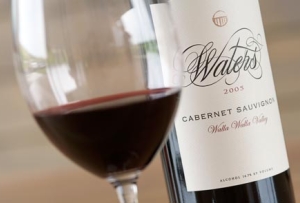 My education started at Waters Winery. Waters Winery produces what is arguably the best syrah to come out of Washington and is also the home of Rotie Cellars; one of Walla Walla most anticipated new wine makers where I was able to help bottle the finished product. I paid a visit to Rotie Cellars in Sept of 2007 when the wines were in the early stages of fermentation and we helped ?punch down? the grape skins to give the wine its deep dark color. Even though I had just spent one day almost a year ago with the wine, I still felt a connection and small sense of pride as each bottle went by. I can only imagine the range of emotions the winemaker must feel throughout the process and at the finale when the wine is put ?safely in bottle? as they say.
The first wine we bottled was a 55% Grenache, 35% Syrah, 10% Mourv?dre. This take on a Southern Rhone favorite has hints of raspberry, currants and cranberry balanced by a taste of anise and tobacco. The second wine produced by Rotie Cellars for 2007 is a classic from the Northern Rhone. This of 97% Syrah co-fermented with 3% of the white grape Viognier tastes of darker fruits such as blackberry and cassis tempered by hints of pepper and a touch of rose petal. The Winemaker, Sean Boyd of Tacoma Washington, was nervous the night before as the wine was transferred from the barrels it had been so comfortable in to a large vat where it was then to be transferred into bottle.
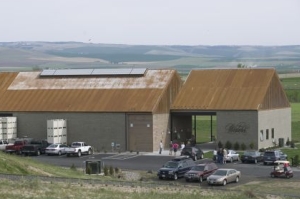 The entire bottling operation is housed in the trailer of a semi truck. This allows Signature bottling to take any one of their fleet of bottling trucks like this one wherever they are needed. It takes roughly nine people to man the conveyor belt while maybe a couple more handle quality control. The bottles move by at a rate of about 58 per minute and they keep you busy. Someone is charged with the duty of unloading the empty bottles at the beginning while at the next station, generally two people place the foil capsules on the tops of the bottles so they can be sealed and the labels can be put on. Next, two people take the finished bottles off the conveyor belt and place them as gently as possible into cases. And finally, the case is sent down a track to a couple guys outside where it is date stamped labeled and stacked on a pallet. We did about 900 cases in about 4 hours.
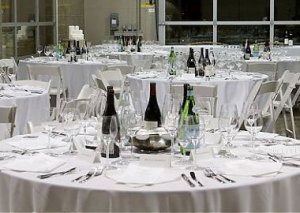 Once the work is done, comes the best part: tasting. We sat in the warm Walla Walla sun and drank cold beer and tasted the newly bottled wine. Evidently there is an old saying that goes something like ?It takes a lot of cold beer to make good wine?. The fear whenever bottling is that the wine will be in ?bottle shock?. There is a lot of air being introduced to the wine and it?s a rough ride from barrel to vat to bottle so the wine usually has to rest in bottle for at least a couple months. That said, we tried both the southern and the northern wines, as Sean affectionately refers to his creations, and they both tasted deliciously smooth and wonderful. Only problem is I?ve already given them 100 points on the Mike Ruffo scale of deliciousness so I can?t imagine how good they will be after they rest in bottle. Good news considering Sean?s nerves the night before.
So, bottles in hand we went to celebrate at one of Walla Walla?s finest restaurants, Saffron. To me, Saffron embodies a main reason why Walla Walla will rival Napa; the high degree of quality, impeccable service, and incredible menu that was met with an easy casualness that sets Walla Walla apart from anywhere else. So if you?re looking for a relaxing and unpretentious way to get more familiar with wine, buy a bottle of Walla Walla wine. Then pay them a visit and relax knowing that you are surrounded by good people who make great wine and want to share it.
-Mike Ruffo
My education started at Waters Winery. Waters Winery produces what is arguably the best syrah to come out of Washington and is also the home of Rotie Cellars; one of Walla Walla most anticipated new wine makers where I was able to help bottle the finished product. I paid a visit to Rotie Cellars in Sept of 2007 when the wines were in the early stages of fermentation and we helped ?punch down? the grape skins to give the wine its deep dark color. Even though I had just spent one day almost a year ago with the wine, I still felt a connection and small sense of pride as each bottle went by. I can only imagine the range of emotions the winemaker must feel throughout the process and at the finale when the wine is put ?safely in bottle? as they say.The first wine we bottled was a 55% Grenache, 35% Syrah, 10% Mourv?dre. This take on a Southern Rhone favorite has hints of raspberry, currants and cranberry balanced by a taste of anise and tobacco. The second wine produced by Rotie Cellars for 2007 is a classic from the Northern Rhone. This of 97% Syrah co-fermented with 3% of the white grape Viognier tastes of darker fruits such as blackberry and cassis tempered by hints of pepper and a touch of rose petal. The Winemaker, Sean Boyd of Tacoma Washington, was nervous the night before as the wine was transferred from the barrels it had been so comfortable in to a large vat where it was then to be transferred into bottle.
The entire bottling operation is housed in the trailer of a semi truck. This allows Signature bottling to take any one of their fleet of bottling trucks like this one wherever they are needed. It takes roughly nine people to man the conveyor belt while maybe a couple more handle quality control. The bottles move by at a rate of about 58 per minute and they keep you busy. Someone is charged with the duty of unloading the empty bottles at the beginning while at the next station, generally two people place the foil capsules on the tops of the bottles so they can be sealed and the labels can be put on. Next, two people take the finished bottles off the conveyor belt and place them as gently as possible into cases. And finally, the case is sent down a track to a couple guys outside where it is date stamped labeled and stacked on a pallet. We did about 900 cases in about 4 hours.Once the work is done, comes the best part: tasting. We sat in the warm Walla Walla sun and drank cold beer and tasted the newly bottled wine. Evidently there is an old saying that goes something like ?It takes a lot of cold beer to make good wine?. The fear whenever bottling is that the wine will be in ?bottle shock?. There is a lot of air being introduced to the wine and it?s a rough ride from barrel to vat to bottle so the wine usually has to rest in bottle for at least a couple months. That said, we tried both the southern and the northern wines, as Sean affectionately refers to his creations, and they both tasted deliciously smooth and wonderful. Only problem is I?ve already given them 100 points on the Mike Ruffo scale of deliciousness so I can?t imagine how good they will be after they rest in bottle. Good news considering Sean?s nerves the night before.So, bottles in hand we went to celebrate at one of Walla Walla?s finest restaurants, Saffron. To me, Saffron embodies a main reason why Walla Walla will rival Napa; the high degree of quality, impeccable service, and incredible menu that was met with an easy casualness that sets Walla Walla apart from anywhere else. So if you?re looking for a relaxing and unpretentious way to get more familiar with wine, buy a bottle of Walla Walla wine. Then pay them a visit and relax knowing that you are surrounded by good people who make great wine and want to share it.
-Mike Ruffo

How to Raft the Yak:
Ah, summer in Tacoma. It can be the best two weeks of your life if you're able to keep moving and know how to take advantage of all there is to offer. One of the most fun activities I've found is floating down the Yakima River. It's a day of fun and sun and you can invite as many people as you want. Another bonus is that Central Washington is usually much warmer than Seattle so you can make this an early summer activity to get you in the mood or you can stretch summer out by doing it in late August or early September. I don't recommend going much after Labor Day, however, because the days get shorter and you don't want to still be in the river when the warm sun goes behind the hills. Things cool down quite a bit over there once the sun goes down.
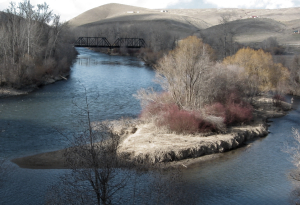 It's a good idea to meet up around noon and head down to the drop point ASAP. It takes about an hour or so to get the rafts all blown up and tied together and, depending on how many people you have, it can take a while to organize everything. Also, count on at least one of your pumps breaking and maybe some other random mishap to slow you down. After you shove off, the whole floating thing takes between four to five hours so pace yourself accordingly.
Now, once you've got your crew assembled, grab your favorite pair of gaudy sunglasses, maybe some water wings, a paddle or two, and follow these easy instructions to have yourself a great day of floating and relaxing in the Central Washington sun.
Take the Canyon Road/Ellensburg Exit off of I-90. Meet at Saks Family Restaurant on Canyon Road just south of Ellensburg. Drive approximately 6.5 miles south on Canyon Road to point to put the raft in. Canyon Road turns into SR 821. Drop in point is roughly at mile marker 22 I believe it's called the Big Horn access area. Take at least two cars approximately 12 miles south on Canyon Road to the Big Pine camping/Access area, this is where the trip ends and you will want a car here with dry towels and clothes for people once you get the rafts out. Leave at least one car there and return to the drop-in point. Before leaving Big Pine, it's a good idea to tie some fluorescent ribbon around trees or bushes at a few points up the river as markers so you'll know when its time to start thinking about getting out. This prevents the end coming as a surprise and having to try to get a large raft full of slightly drunk people to the opposite side of the river in a hurry. Trust me, its worth the effort to tie the ribbons. Regardless, you'll probably have to jump off and pull the thing to the side. Some sturdy river sandals help a lot in this effort.
We have found that it's best to buy some two and four man inflatable rafts for floating. The four man rafts can generally hold a cooler and a person or two. We've also had much success using a fun island or the like. Keep in mind fun islands are difficult to steer (see below). We then tie whatever rafts we have together. It's a good idea to have some sort of "front" of the flotilla for steering purposes and to prevent your raft filling up with a rather foul mixture of river water and beer we like to reserve a small raft in the center for such things as empty cans and the like. Now its time to load up the coolers, have everyone grab a piece of the mother ship and shove off.
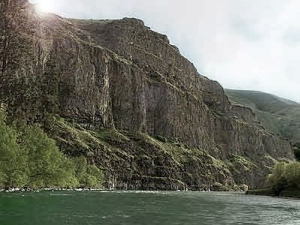 While on the river it's a very nice relaxing time, most of the time. The only thing to worry about is hitting bushes and rocks on the sides of the river as you meander around its curves. It does take some planning to prevent this. Not a lot mind you, but some effort is required or you will get hung up on branches. If your flotilla is only four or five people you should have no problem. Our last venture had about twenty people, a fun island, and a floating trampoline. Lets just say my shoulders were sore for about a week from all the paddling. Again its not too tough but it's a good idea to stay alert as we've lost a few good rafts to this and nearly lost a few decent people as well.
Once you drag the whole mess out of the river, the drivers can hop in the car or cars you left there (make sure you don't leave the keys in the cars back at the drop point or you'll be hitch hiking) and head back to collect the rest of the cars. By the time the drivers get back, the rest of the gang should have the rafts all deflated and should happily be playing Frisbee. All that's left to do now is load up the cars and head home. There is also camping all along the river if you'd like to spend the night before or after the trip.
So there you have it, a great way to spend a summer day in Washington. Now you've just got to figure out how to spend the rest of the two weeks before the rain returns.
-Mike Ruffo